A profitable business can still sell at a discount if one supplier holds too much power. That’s the part many owners miss.
Buyers aren’t paying for last year’s numbers. They’re paying for future cash flow, and supplier dependence makes that cash flow less certain. If stock stops, prices jump, or terms change after completion, the buyer carries the damage.
If you’re planning a sale, an investment round, or a formal business valuation, this risk needs attention early. It isn’t only an operations issue, it’s a value issue.
Why buyers cut the price when supplier risk is high
From a buyer’s side, the logic is simple. They want a business that keeps trading, keeps producing profit, and doesn’t fall apart when one outside party changes its mind.
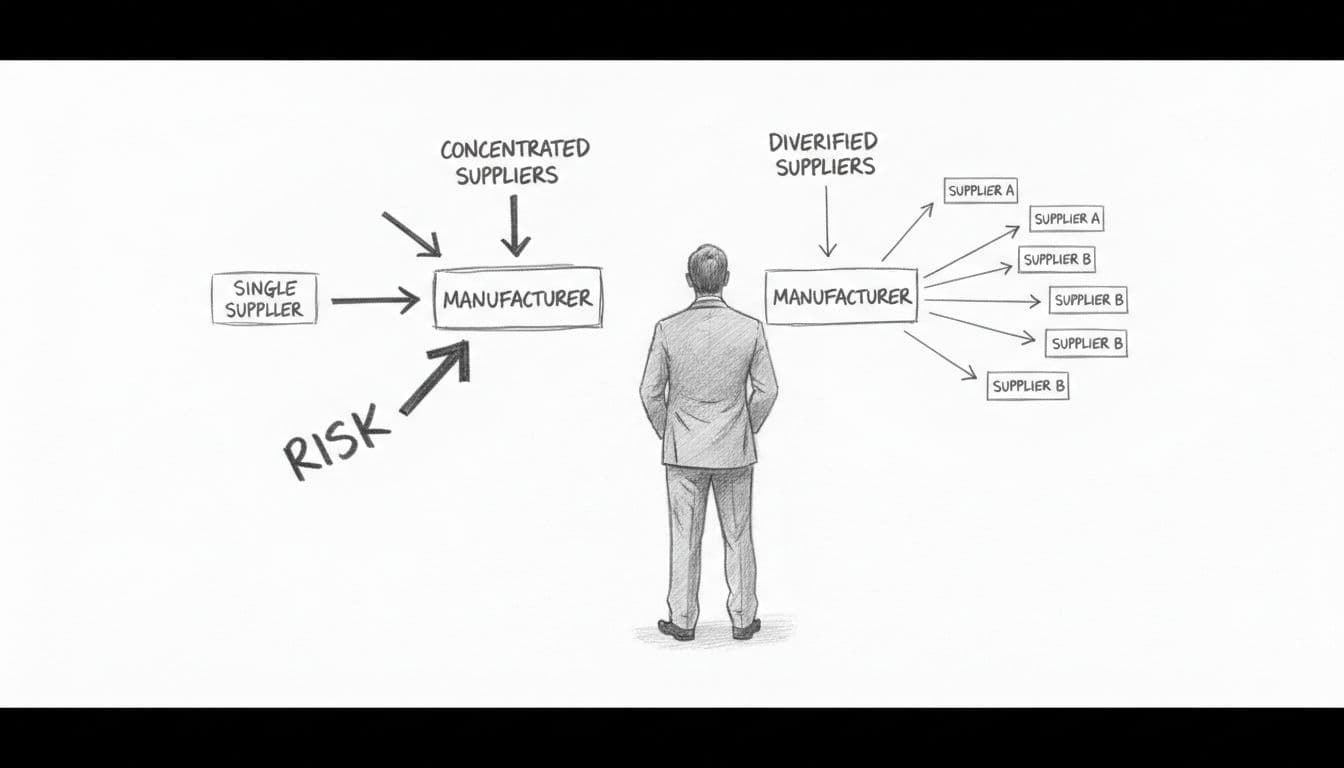
A buyer can accept normal commercial risk. They expect some fluctuation. What they don’t want is a single weak point that can shut down revenue or crush margin in a month.
Buyers don’t pay for historic profit alone. They pay for profit they believe will survive after completion.
A single supplier can stop the whole business
If one supplier provides the bulk of a key input, you’ve got a single point of failure. That risk is easy to explain and hard to ignore.
The problem doesn’t need to be dramatic. A delayed container, a factory problem, a labour dispute, a transport failure, or supplier insolvency can be enough. The result is the same, stock doesn’t arrive, customer orders slip, and cash collection slows.

A buyer sees this and thinks about continuity. Can the business trade next quarter if that supplier disappears? If the answer is “not really”, the valuation takes a hit.
This matters even when current performance looks strong. Strong profit today doesn’t cancel weak supply security tomorrow. Buyers know that.
Less flexibility means less value
Choice has value. A business that can switch suppliers, renegotiate terms, or move volume elsewhere has options. Options protect profit.
The opposite is costly. If the business depends on one supplier because of bespoke tooling, a hard-to-source material, a personal relationship, or lack of approved alternatives, bargaining power sits elsewhere. Not with the owner. Not with the buyer.
That loss of control is worth less at exit. A buyer may still proceed, but they’ll build a discount into the offer because they know future terms could worsen and leave them with little room to respond.
A sale price is never only about earnings. It’s also about how secure those earnings are. Supplier flexibility helps prove that security.
The main ways supplier dependence reduces exit price
The discount usually appears in three places: profit, multiple, and buyer confidence. Different route, same outcome.
This simple view helps show where value gets lost:
| Issue | What the buyer sees | Likely effect on exit price |
|---|---|---|
| Heavy reliance on one supplier | A continuity risk outside management control | Lower multiple |
| Weak ability to absorb cost increases | Future margins may fall | Lower EBITDA |
| Informal or fragile supply arrangements | Problems during due diligence | Price chips, holdbacks, or tougher terms |
The key point is this: supplier dependence doesn’t sit in one box. It affects several parts of the deal at once.
Margins shrink when suppliers raise prices
When a business has poor supplier spread, cost increases are harder to manage. The supplier knows the customer has limited alternatives. That weakens negotiation from day one.
Some businesses can pass increased cost to customers quickly. Many can’t. There may be fixed-price contracts, competitive pressure, or buyer resistance. In that gap, margins get squeezed.
That matters because valuation often starts with maintainable earnings. In the UK market, as of May 2026, many medium-sized businesses still change hands around 4 to 6 times EBITDA. So if supplier pricing pressure cuts EBITDA, the value drop is multiplied.
Take a simple example. If EBITDA falls by £50,000 and the deal multiple is 5x, that’s a £250,000 reduction in value before any further risk discount. Same business. Same customers. Lower exit price.
Risk pushes buyers towards a lower multiple
Even if earnings haven’t fallen yet, concentration risk can still reduce the multiple. Buyers use multiples to price confidence as much as performance.
A business with recurring demand, good systems, and healthy supplier spread may land near the stronger end of market range. A business with one dominant supplier often moves the other way. The buyer expects more uncertainty, more monitoring, and more downside.
This is where owners get frustrated. They say, “But the numbers are good.” Buyers reply, “For now.” That gap in perspective is where discounts appear.
Private buyers, investors, and lenders all think this way. If future earnings look less dependable, they get cautious. Lower debt support, lower headline offer, more earn-out pressure. It all points in the same direction.
Due diligence uncovers red flags fast
Supplier risk rarely stays hidden for long. Good diligence gets there quickly.
Buyers and their advisers will ask direct questions. Who supplies the top products? What percentage of spend sits with the top one, two, or three suppliers? Are there written contracts? How long are they for? What are the notice periods? What happens if the supplier walks away?
Weak answers damage confidence. So do unclear records, handshake arrangements, and over-reliance on the owner’s personal relationship with one key vendor.
This is where price pressure often starts. A buyer may reduce the offer. They may ask for retention money, longer warranties, or a seller earn-out tied to supply continuity after completion. The headline price might look fine at first glance, then shrink once the detail lands.
What buyers check in a supply chain before they bid
Before making an offer, buyers look for evidence that supply is stable, documented, and transferable. They don’t need perfection. They need comfort.
That means looking past the supplier list and into the structure behind it. Who has the power? Where are the weak points? How hard is it to replace a failed supplier without hurting the customer?
How many suppliers really support the business?
This isn’t only about counting names on a spreadsheet. Buyers look at concentration by spend, by product line, and by operational importance.
A business might have 15 suppliers in total, yet one of them may account for 70% of the product that drives most sales. That’s still concentration risk. On the other hand, a business with four well-balanced suppliers may look much safer.
Healthy spread doesn’t mean total elimination of dependency. It means no single supplier can hold the business hostage. That’s a far more saleable position.
Buyers also separate critical inputs from non-critical ones. Dependence on a packaging supplier is one thing. Dependence on the only approved manufacturer of your core product is quite another.
Are contracts formal, long-term, and secure?
Written agreements matter because they reduce ambiguity. Buyers want to see notice periods, pricing terms, service levels, supply commitments, and renewal rules in black and white.
An informal arrangement may have worked for years. That doesn’t mean it adds value in a transaction. If supply depends on goodwill, a buyer sees fragility.
Formal contracts don’t remove all risk. A supplier can still have operational issues. Still, written terms help a buyer judge what protection exists and how much warning they would get if the relationship changed.
Paperwork also makes due diligence faster. Clean, credible records support a stronger valuation case. Loose documents weaken it.
Can the business switch suppliers without pain?
This is one of the biggest questions in practice. A buyer wants to know whether switching is realistic, not theoretical.
If a replacement supplier needs six months of testing, customer approval, tooling changes, fresh certifications, and staff training, the business is more tied in than it first appears. That lock-in affects value.
If alternative suppliers are already qualified, lead times are known, and quality standards are documented, the risk drops. A buyer sees a business that can absorb disruption instead of freezing when trouble hits.
Switching ability is a form of control. Control supports price.
How to reduce supplier dependence before you go to market
The best time to fix this is before buyers start asking questions. Once a process is live, weaknesses become negotiating points.
None of this requires a perfect supply chain. It requires sensible preparation, good records, and fewer obvious points of failure.

Build a backup supplier list early
Don’t wait for a crisis. Identify at least one or two alternative suppliers for key inputs before you need them.
That means more than collecting names. Run basic checks. Test quality. Confirm lead times. Open the account. In some cases, even a partial backup route is enough to lower buyer concern.
A qualified alternative tells a better story than a promise to “look into it later”.
Spread spend across more than one supplier
Balance matters more than total removal of risk. Most SMEs won’t split every purchase evenly, and they don’t need to.
What buyers want to avoid is extreme concentration. If one supplier takes 90% of critical spend, that needs work. A more balanced position, even 60/40 or 70/30 in the short term, is easier to defend.
Done properly, this also improves your negotiating position before exit. Better terms now, better valuation later.
Put key terms in writing
If an arrangement matters, document it. That includes supply terms, price review rules, service expectations, notice periods, and any exclusivity.
Paper alone doesn’t solve a weak supply base. It does make the business easier to assess, easier to defend, and easier to transfer.
This is one of the areas Consult EFC looks at when helping owners prepare for exit or investment. Buyers don’t reward vague assurances. They reward evidence.
Keep proof of resilience ready for diligence
A buyer won’t take comfort from verbal explanations alone. Keep records that prove the business can cope.
That might include alternative supplier quotes, previous test orders, contingency plans, stock cover policy, and evidence of how you handled past disruption without losing customers. If you’ve already solved a supply issue once, show it.
Good diligence material supports value. Poor material invites doubt. And doubt nearly always costs money.
Protect the value before the buyer finds the risk
Supplier dependence can cut exit price even when the business looks healthy on paper. The issue isn’t only today’s profit, it’s how exposed that profit is after the deal closes.
The owners who protect value early usually do the same few things well. They reduce concentration, formalise key terms, and keep proof ready for scrutiny.
If one supplier has too much control over your business, that isn’t a purchasing detail. It’s exit planning.
Not sure what your business is worth right now?
Request a confidential valuation — ICAEW Chartered Accountants, Big Four trained. No junior analysts. Fixed fees.
Request My Valuation
Over 12 years across Big Four audit, Investment Banking and corporate advisory. Kishen works with UK SMEs on valuations, exit planning, fundraising and financial strategy. ICAEW regulated. Big Four trained. Based in London.